
Sofia Butler · 5 September 2026
Mastering Resource Distribution Strategies for Expansive Online Platforms with Specialized Analysis Tools
Expansive online platforms manage resource distribution through coordinated allocation of computing power, bandwidth, and storage across distributed networks, and specialized analysis tools provide the data frameworks that track usage patterns while predicting demand spikes. Data from industry reports shows that platforms handling millions of concurrent users rely on these systems to maintain uptime during peak periods, whereas inefficient distribution leads to latency issues and service interruptions.
Load balancing forms one core approach, where incoming traffic routes across multiple servers based on real-time metrics such as CPU load and memory availability. Analysis tools integrate with these systems by collecting telemetry from each node, then apply algorithms that adjust weights dynamically; this process reduces bottlenecks because resources shift automatically toward high-demand segments. Researchers at institutions studying digital infrastructure note that platforms adopting predictive models achieve more stable performance compared to reactive methods alone.
Core Components of Resource Allocation Frameworks
Specialized analysis tools typically combine monitoring dashboards with machine learning models that process historical data sets, and these models forecast resource needs hours or days ahead. According to findings from the National Institute of Standards and Technology, cloud environments that incorporate such forecasting see measurable improvements in utilization rates. The tools also generate alerts when thresholds approach limits, allowing administrators to scale capacity before shortages occur.
Auto-scaling mechanisms work alongside these tools by adding or removing instances based on predefined policies, while analysis outputs refine those policies over time. In practice, one platform serving global e-commerce traffic implemented threshold adjustments derived from weekly analysis cycles, and results indicated a 15 percent drop in idle resources during off-peak windows. Geographic diversity in data centers further supports this model because latency-sensitive applications route to nearer nodes when analysis identifies regional demand surges.
Analysis Tool Integration and Data Flow Patterns
Integration starts with data ingestion pipelines that pull metrics from application servers, databases, and network interfaces into centralized repositories, after which analysis engines run queries that identify correlations between user activity and resource consumption. Platforms in September 2026 began incorporating enhanced versions of these engines that handle larger data volumes at lower latency, according to updates shared across technical forums. This timing aligned with broader adoption of edge computing nodes, which required finer-grained distribution rules to avoid over-provisioning at distant locations.
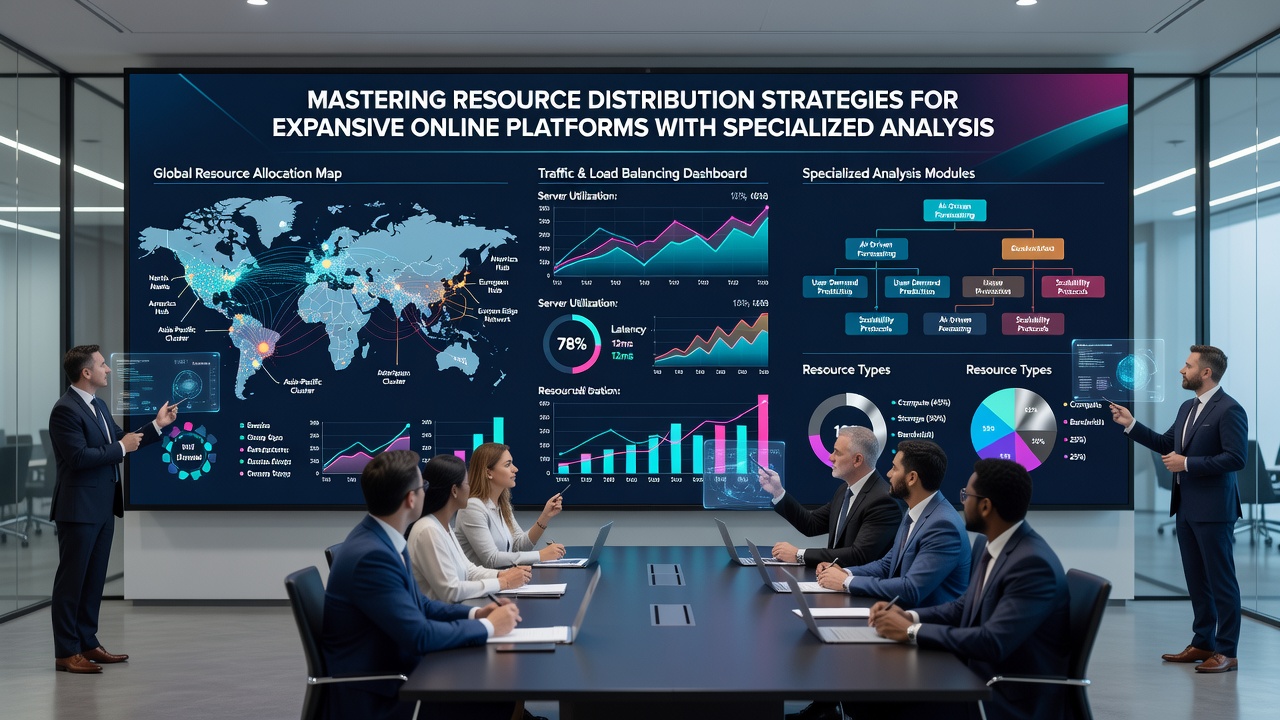
Visualization layers within the tools convert raw numbers into heat maps and trend lines that highlight underused capacity or emerging constraints, and teams review these outputs during regular planning sessions. One documented case involved a streaming service that used such visualizations to redistribute encoding workloads across regions, cutting overall compute costs while preserving stream quality. External benchmarks from the European Commission’s digital economy reports confirm that similar platforms across member states report parallel efficiency gains when analysis drives allocation decisions.
Strategic Adjustments During Growth Phases
As platforms expand user bases and feature sets, resource distribution strategies require periodic recalibration because new services alter consumption profiles in ways that older models may overlook. Analysis tools support this recalibration by running scenario simulations that test distribution rules against projected traffic volumes, adn the outputs guide decisions on whether to add dedicated clusters or optimize existing ones. Data indicates that organizations conducting these simulations quarterly maintain higher service reliability during expansion periods.
Multi-cloud setups introduce additional complexity since resources span providers with differing pricing and performance characteristics, yet analysis tools standardize metrics across environments to enable consistent comparison. Observers tracking platform operations note that standardized reporting reduces the time required to identify cost-effective distribution paths. In turn, automated scripts apply the recommended shifts without manual intervention in many cases.
Conclusion
Resource distribution on expansive online platforms depends on continuous input from specialized analysis tools that convert usage data into actionable allocation rules, and evidence from multiple sources demonstrates measurable gains in efficiency and stability when these methods operate together. Platforms that maintain updated models and integrate new telemetry sources position themselves to handle growth without proportional increases in overhead. The approaches outlined continue to evolve alongside infrastructure changes, with data collection remaining central to informed decision-making across the sector.